
There are places you do not simply find; they find you. Masseria Gemini is one of them.
It stands in the heart of Ugento, only a few minutes from where I live, yet arriving here felt like travelling far away.
Perhaps because in certain places, when you return, you rediscover yourself.
When Antonio called me in late September, he told me that he and his wife Debbie had just completed the restoration of an abandoned masseria in the small village of Gemini, a hamlet that only a few years ago seemed destined to disappear.
Few births, young people gone, closed balconies.
Yet in that silence, someone had chosen to invest, to bring life and dignity back to a place that only needed to be seen with new eyes.
I was born in Ugento and still live here, despite my travels.
I know this land well. Its stillness, its contradictions, its strength to rise again.
When someone from outside decides to believe in these places, it always feels personal. It means they have seen what I see: the timeless beauty of Salento.
Gemini, Ugento: a Salento village reborn through authenticity and luxury hospitality
I park in front of a small square. Gemini feels suspended in time.
The air is still, the houses in pale stone, the rhythm unhurried.
An elderly woman watches from her window with the quiet curiosity of small towns, where every new face carries a story.
A few steps ahead, the gate of Masseria Gemini opens.
Antonio greets me simply, without formality, in a T-shirt and shorts. That authenticity strikes me immediately.
He is from Padova (Italy), Debbie from New York.
They have lived in the city for twenty-five years, building careers as executives in the world of fashion and design, but their real passion has always been something else: restoring forgotten places to their original splendour.
They have done it before in the United States, and now here, in Salento.
For years they had travelled here on holiday with their children, until they discovered this masseria and fell in love with it at first sight.
Crossing the threshold, I stop.
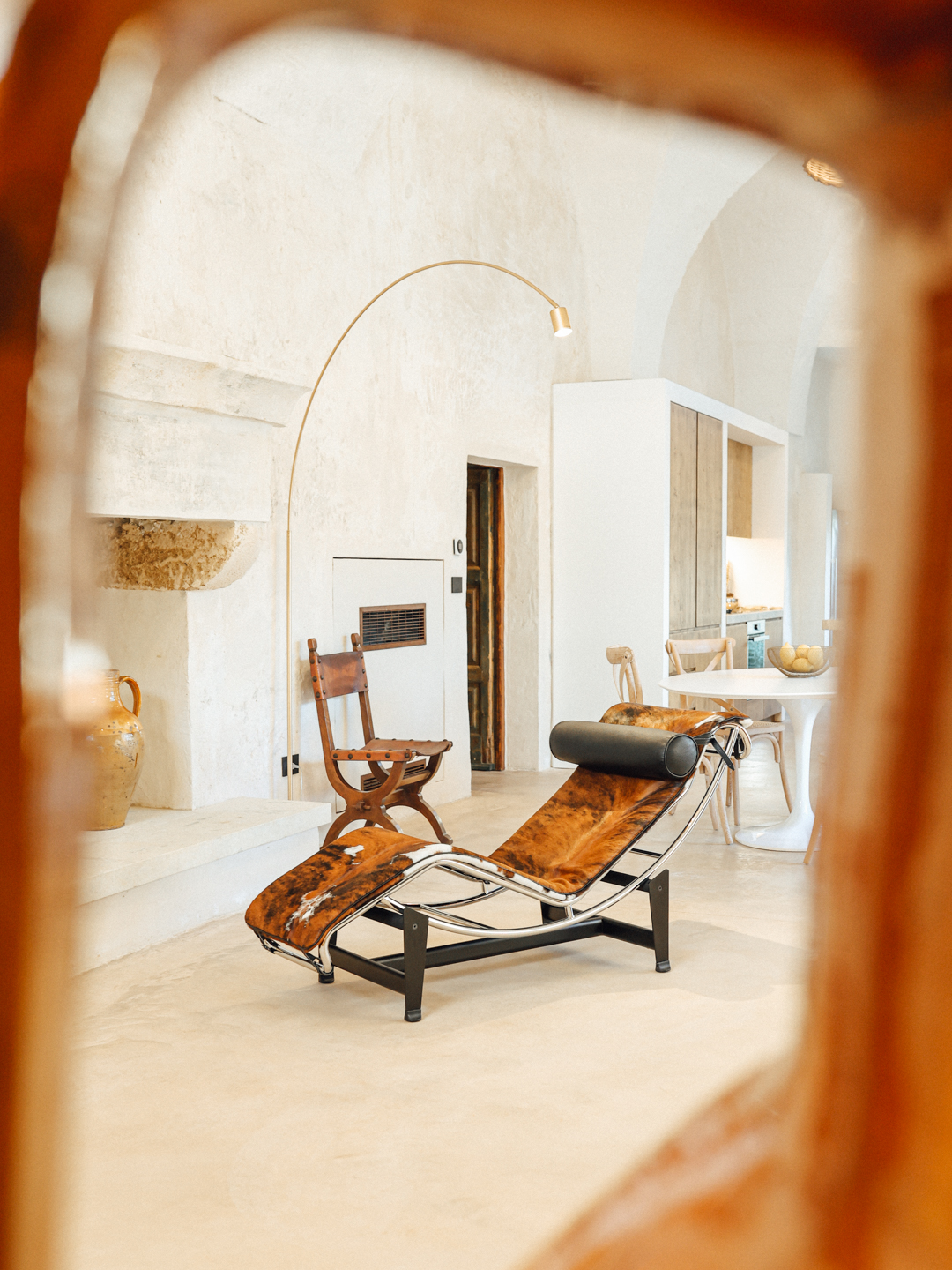
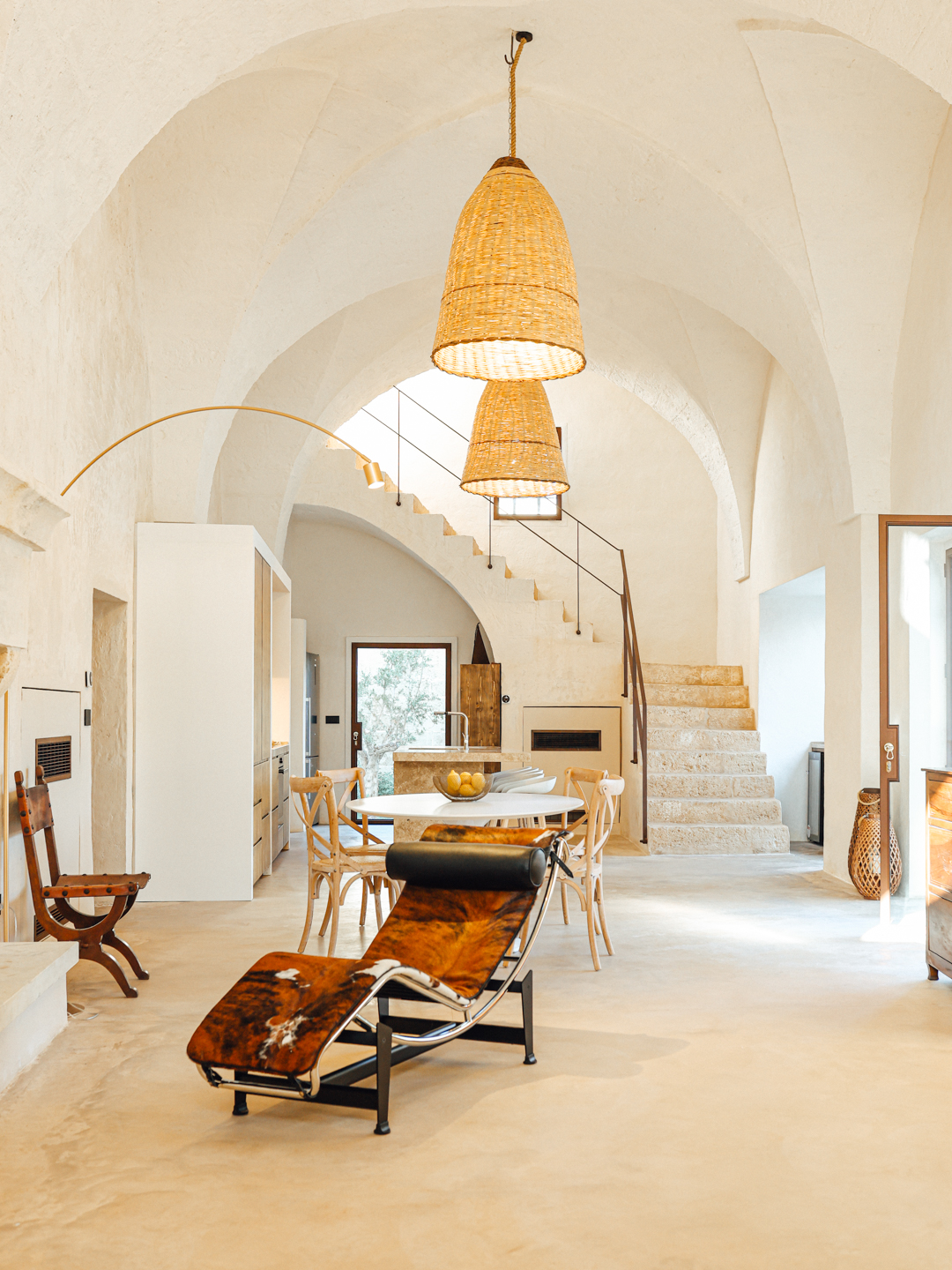
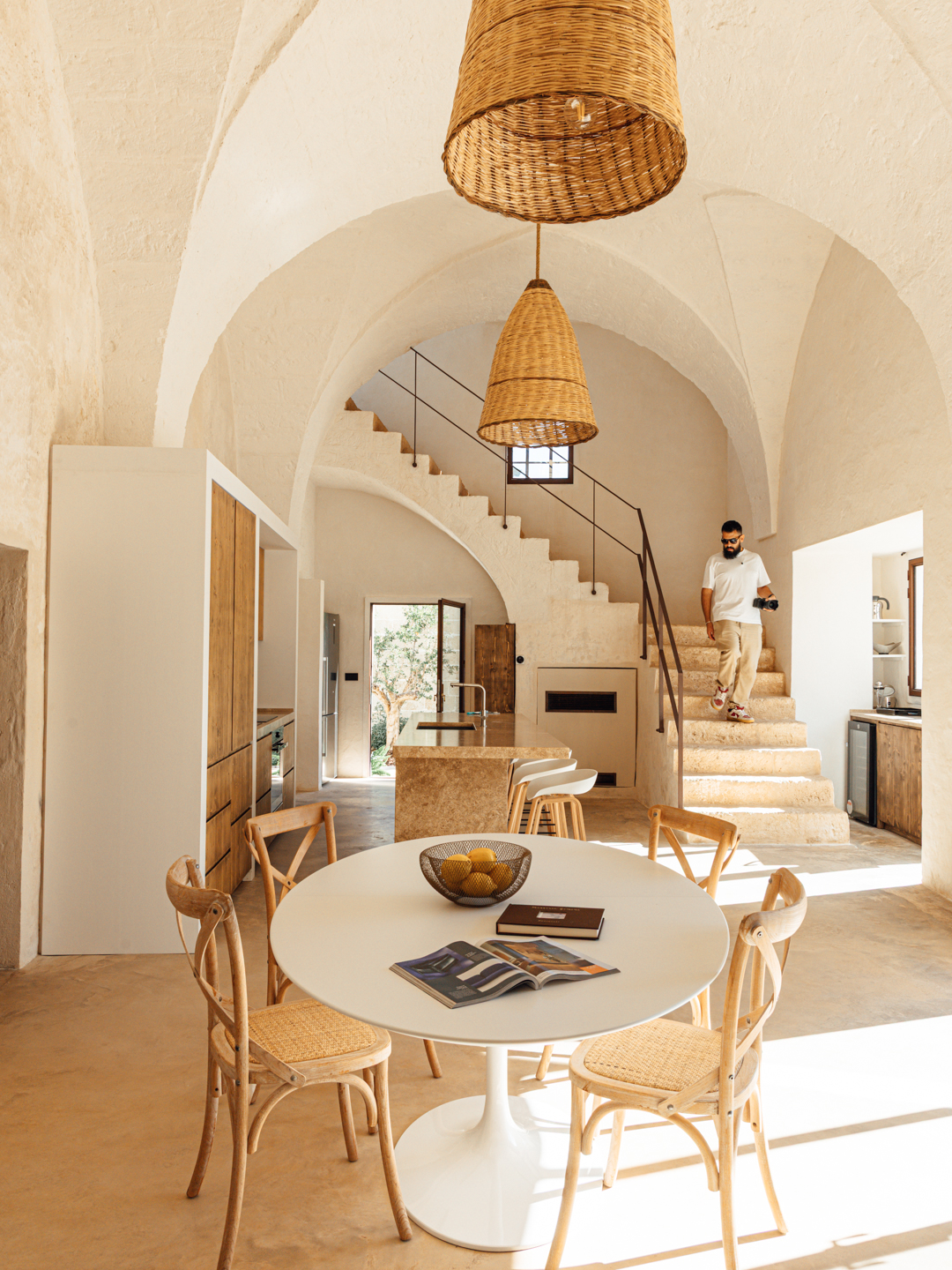
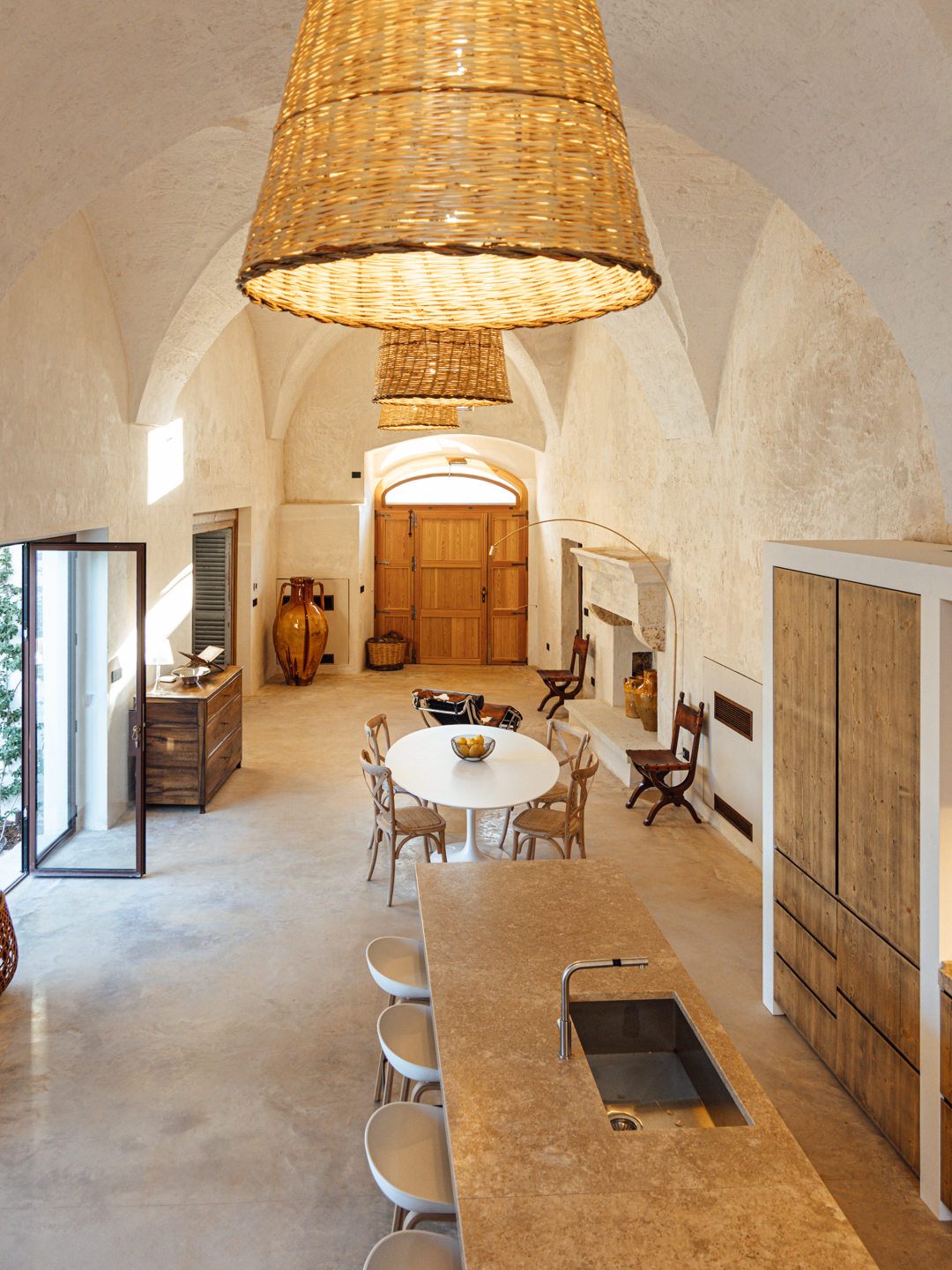
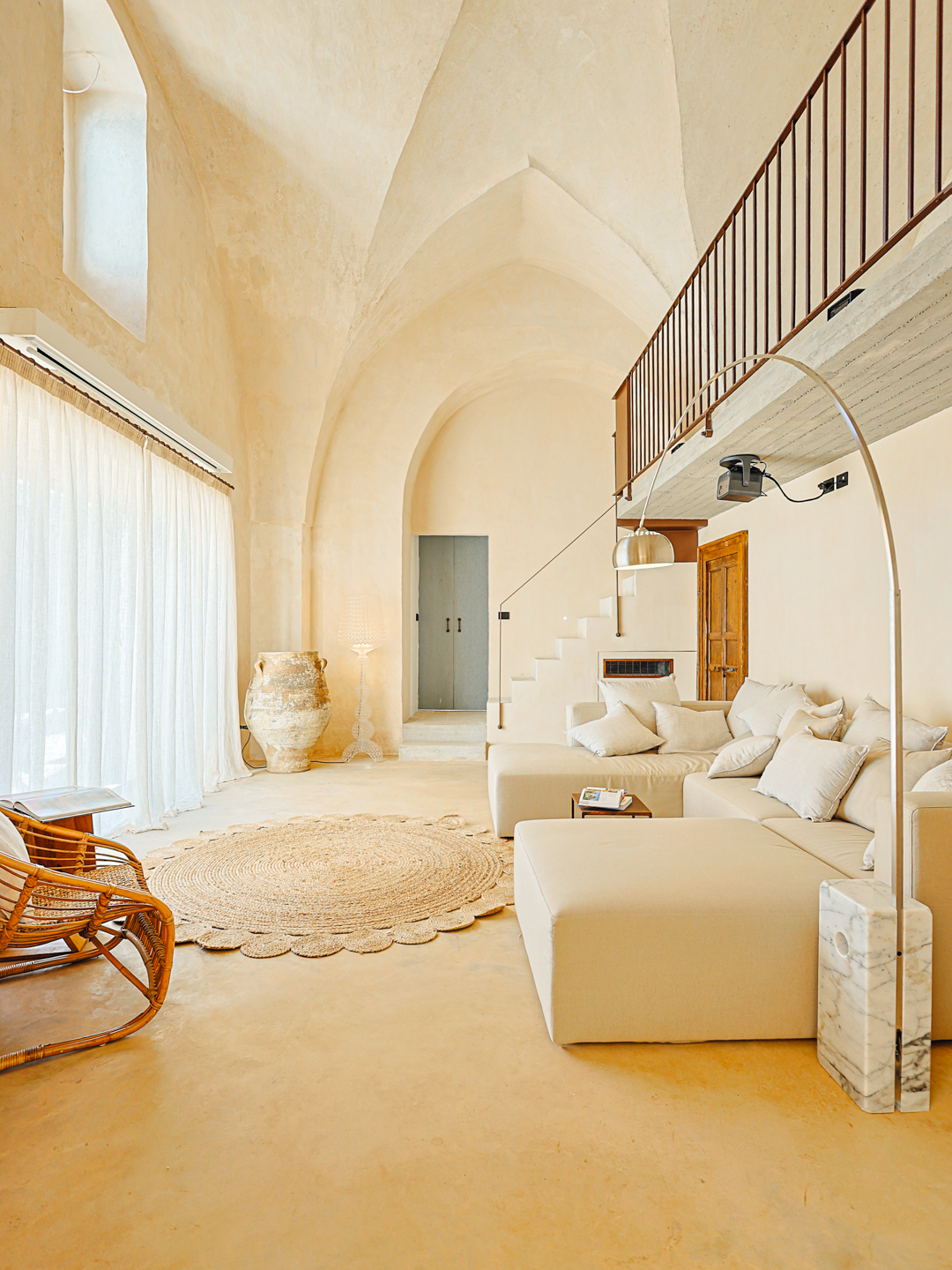
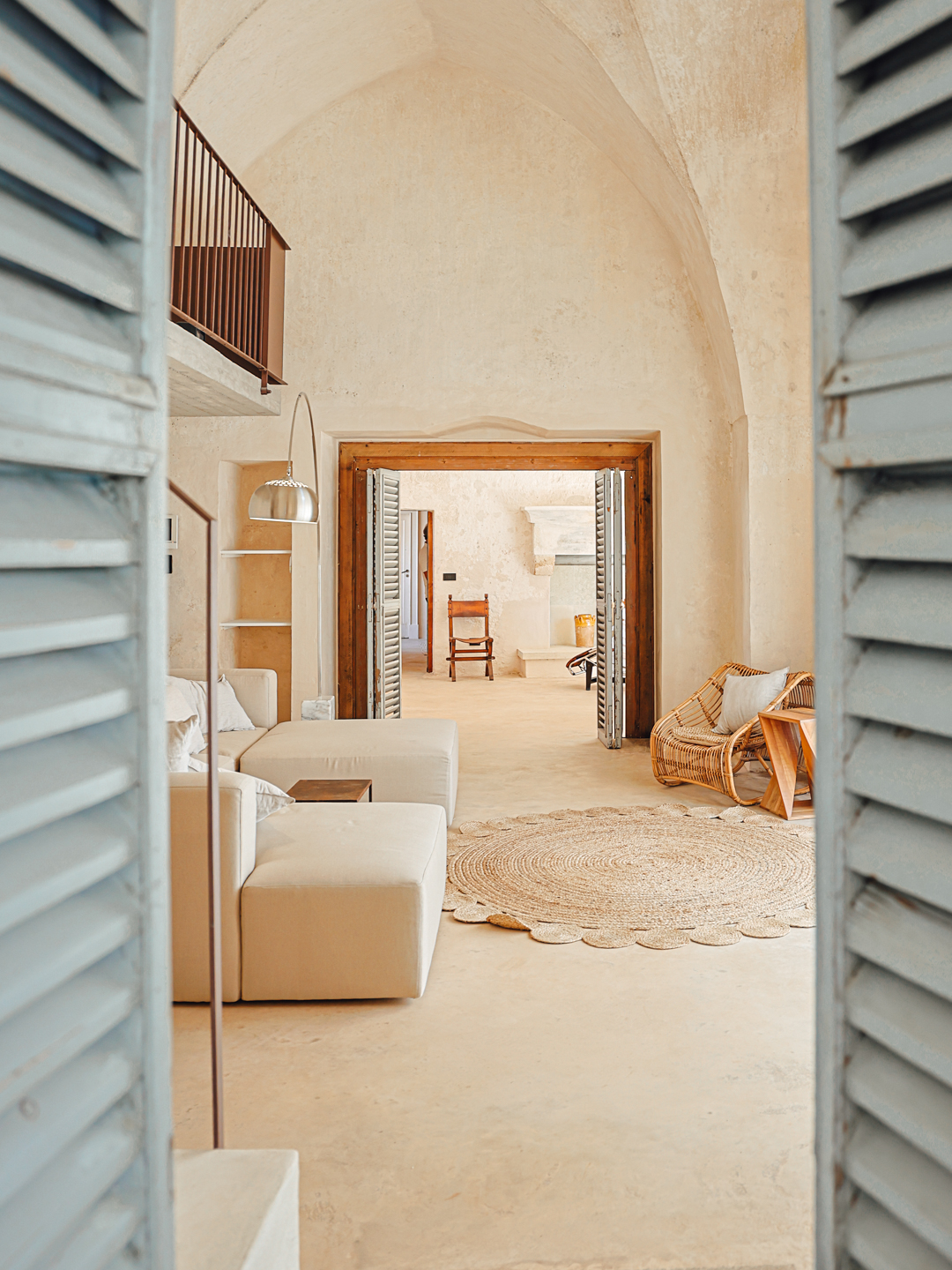
The main hall opens before me like a revelation. It is vast and filled with light.
It carries that rare effect that Antonio and Debbie had envisioned, achieved without any gesture of excess.
The space welcomes you and surprises you at the same time.
He tells me that this central salon was once a street, with houses on either side. Later the street was closed and the roofs joined, giving birth to the masseria.
Some parts of the house date back to the 1600s.
It took three years of careful planning to preserve as much of the original structure as possible while integrating modern design elements with respect.
Every choice has a purpose. Every detail speaks of dialogue between past and present.
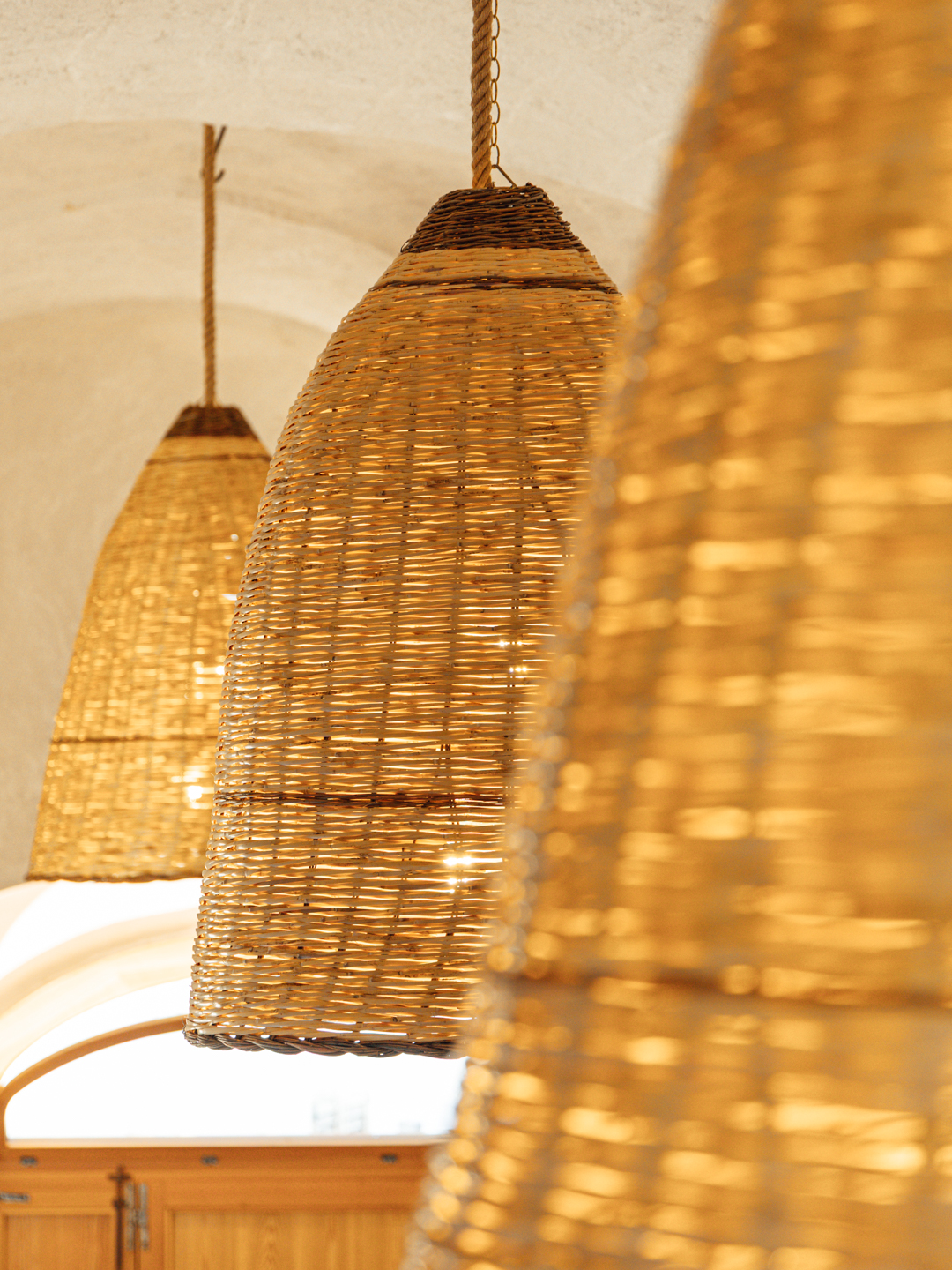
The limewashed walls reflect the southern light, the stone breathes, and the air carries that unmistakable scent of time and silence.
Here, beauty does not need to speak loudly; it simply exists.
Those who loved Villa Torre Bianca a Polignano or Corte Patitari e Casa del Poeta a Gallipoli will recognise the same sensitivity to light and silence, the same editorial soul I look for each time I return to.
A luxury masseria in Salento: where design meets raw beauty
The main living area is wide and full of light.
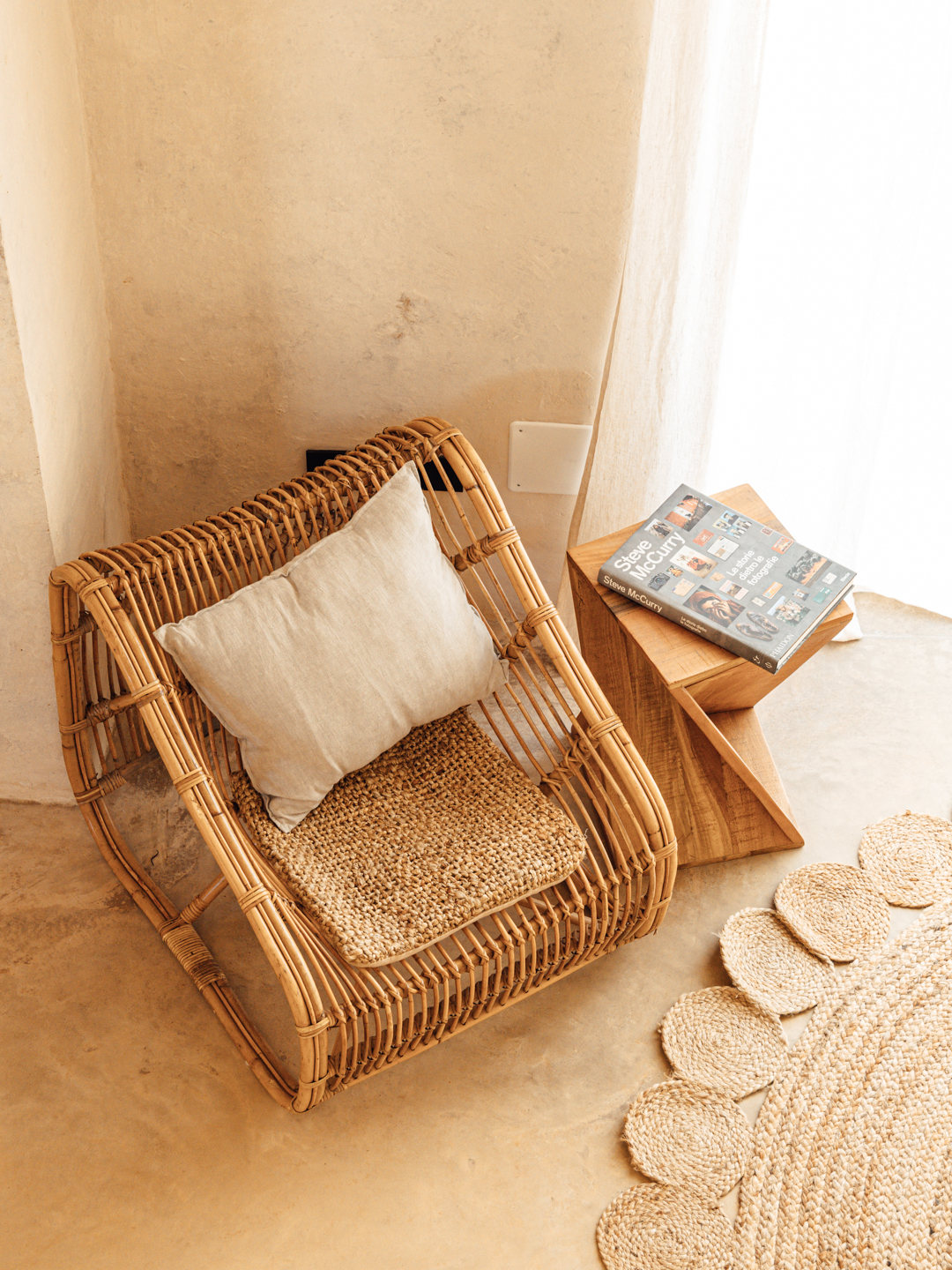
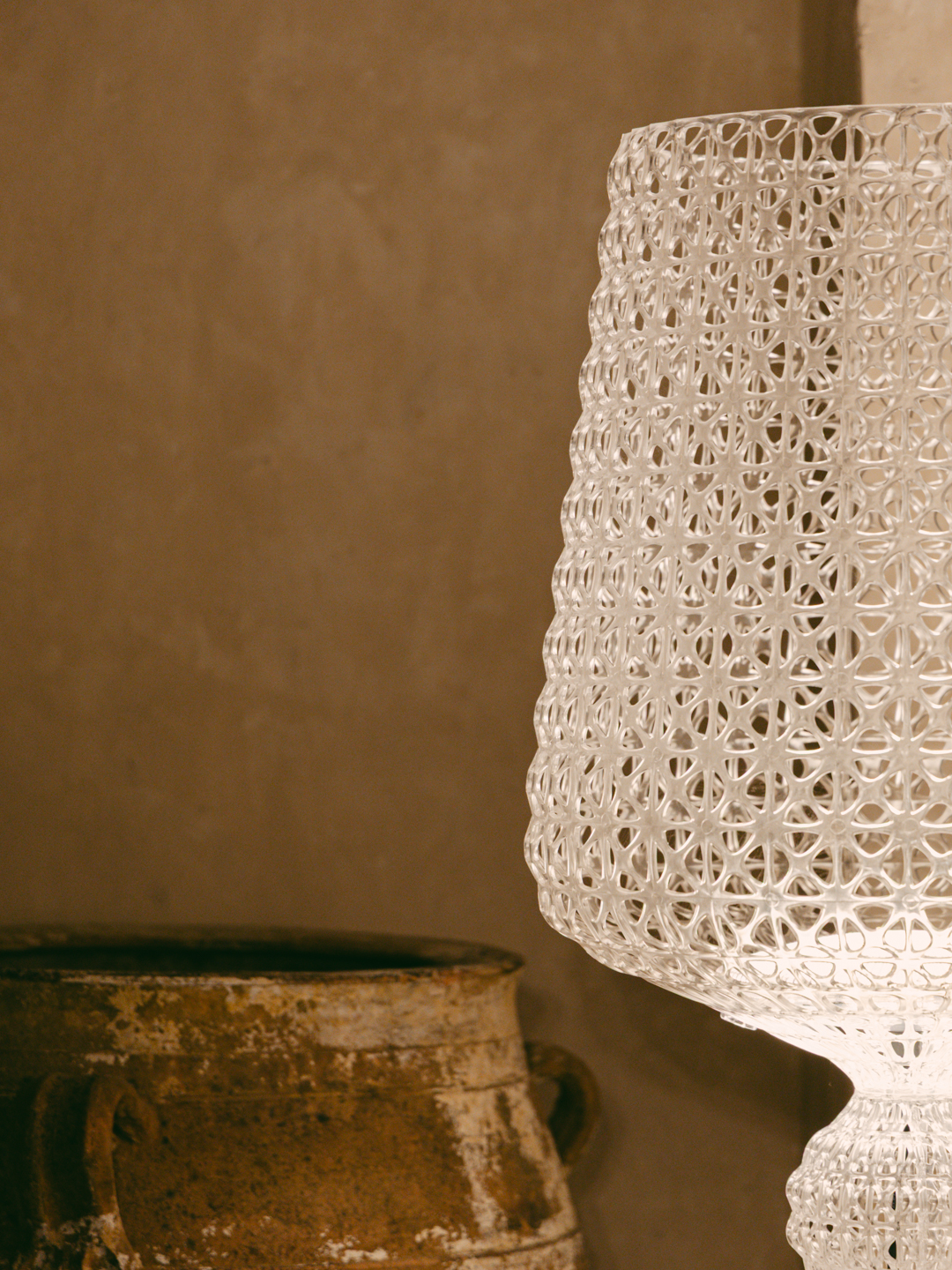
The furnishings are minimal but intentional, chosen to complement the space rather than dominate it.
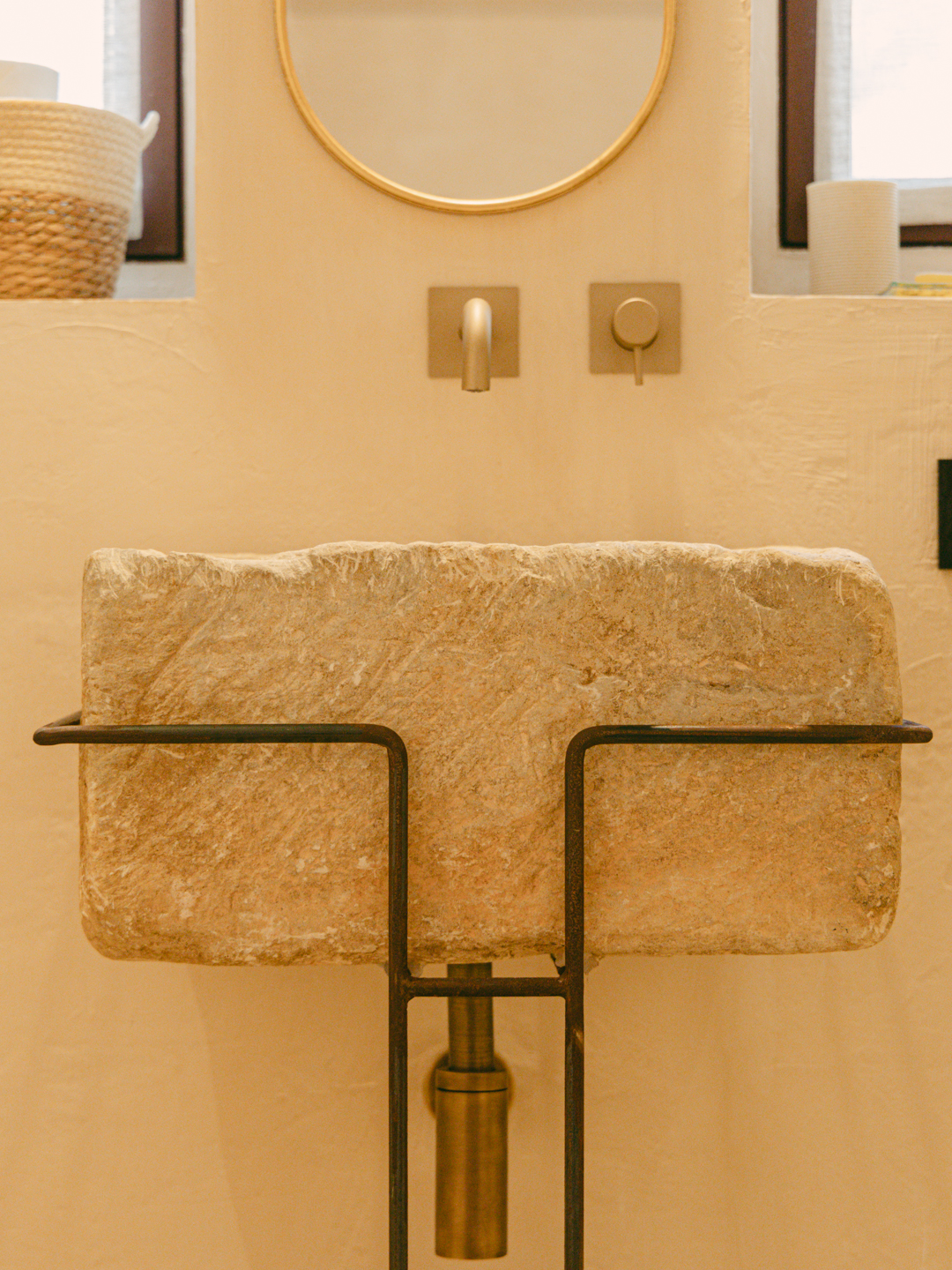
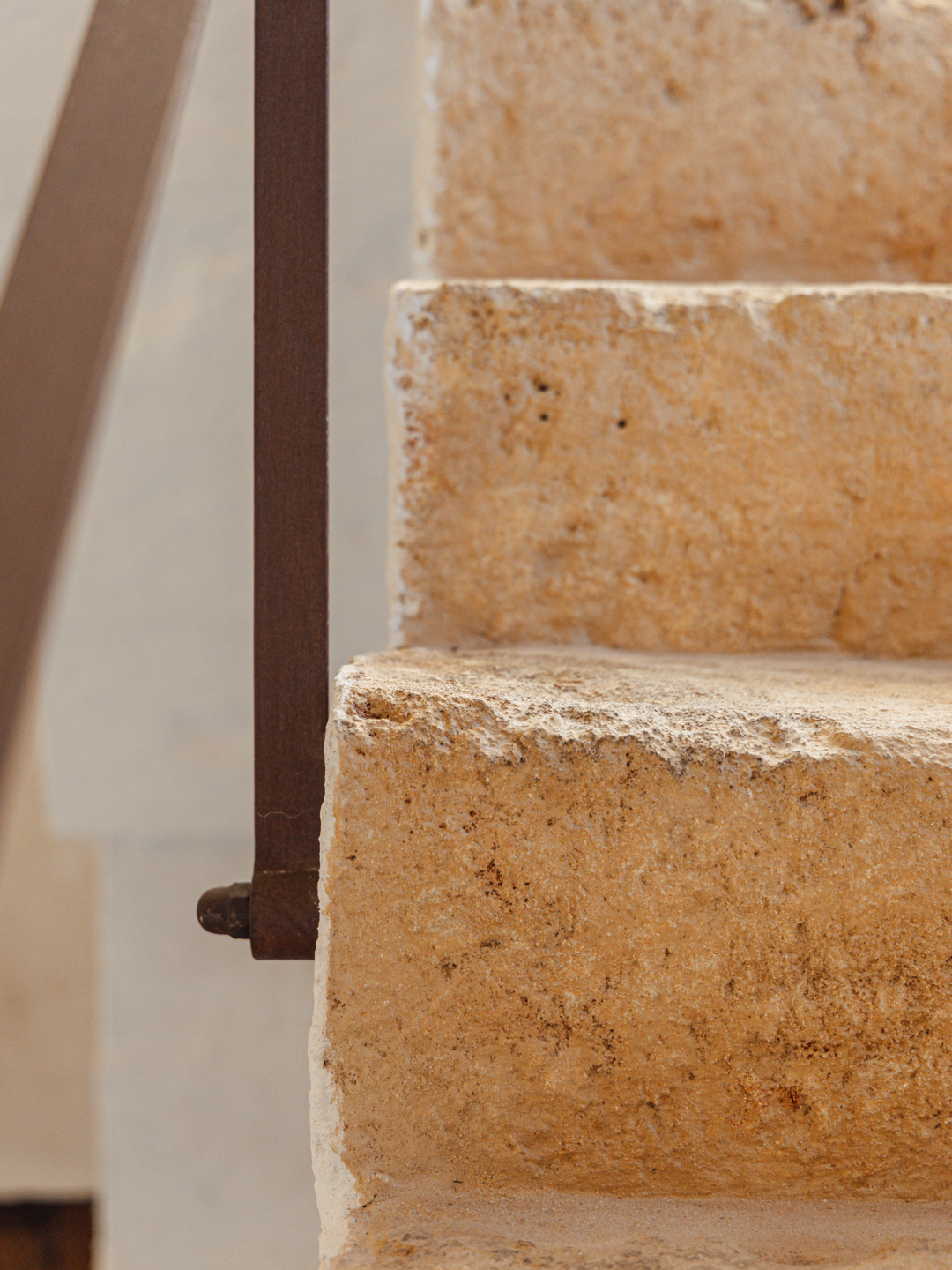
The irregular walls, the natural shades of the stone, the textures left deliberately raw create a harmony that feels both elegant and human.
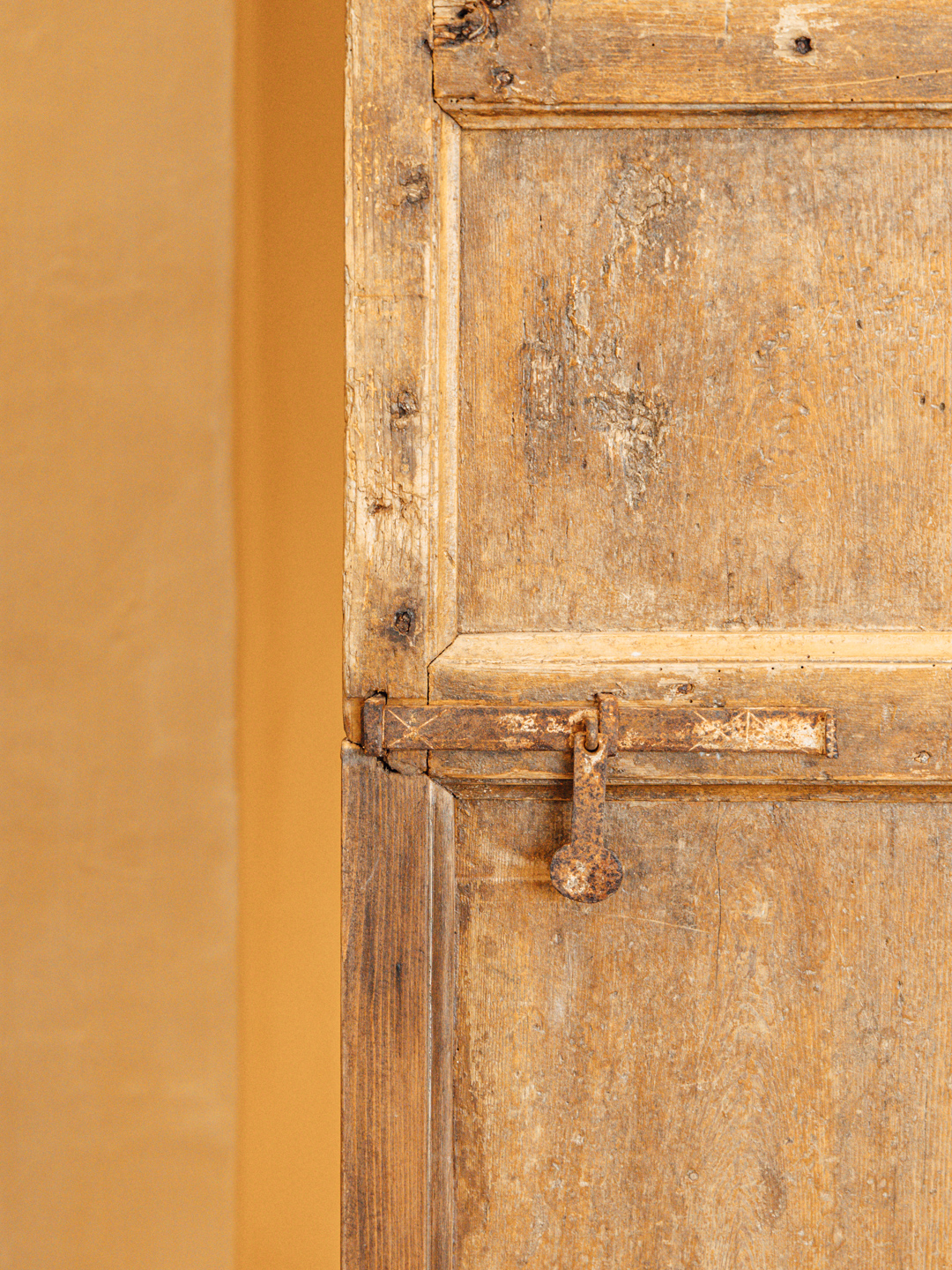
Each surface tells the same story: the choice not to erase but to preserve.
I have photographed many luxury properties, yet few convey such sincerity.
Here, luxury is not perfection; it is authenticity. It is the freedom to show things as they are.
At the far end of the hall, a kitchen with an island invites slow mornings, the scent of coffee and good olive oil in the air.
This is what I call curated simplicity, the quiet kind of refinement that never tries to impress but always manages to move you.


Luxury hospitality in Southern Salento: private cinema and stone suite
Antonio opens the first door on the right.
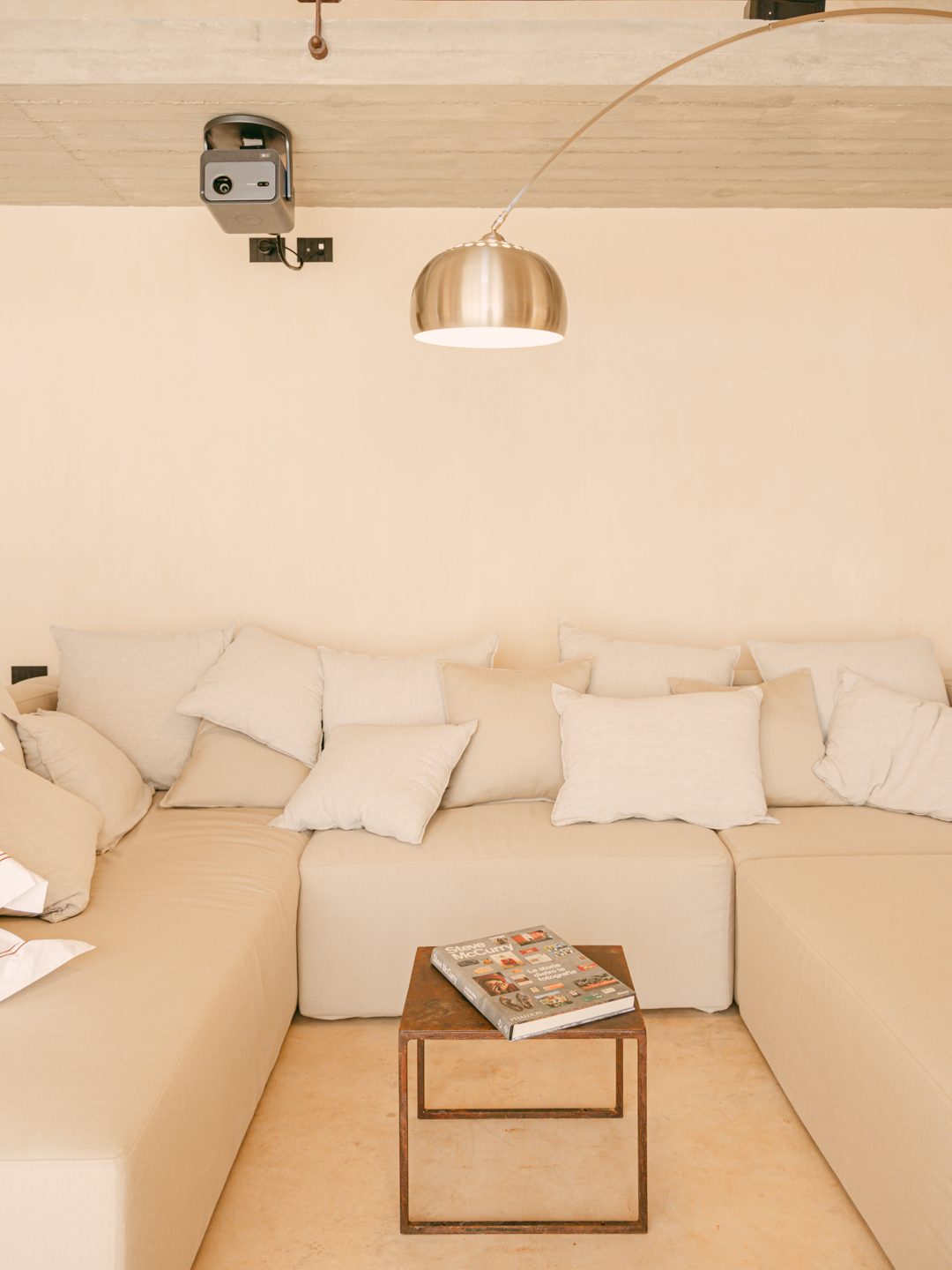
Inside is a small cinema room with vaulted ceilings, exposed stone and a white screen that glides softly from above.
A simple idea, yet a brilliant one.
A place to slow down, to hide from the world.
I imagine summer evenings with windows open, a film playing, and the distant sound of cicadas filling the silence.
This is the kind of quiet luxury I love to tell through my images: not an excess, but a form of peace.
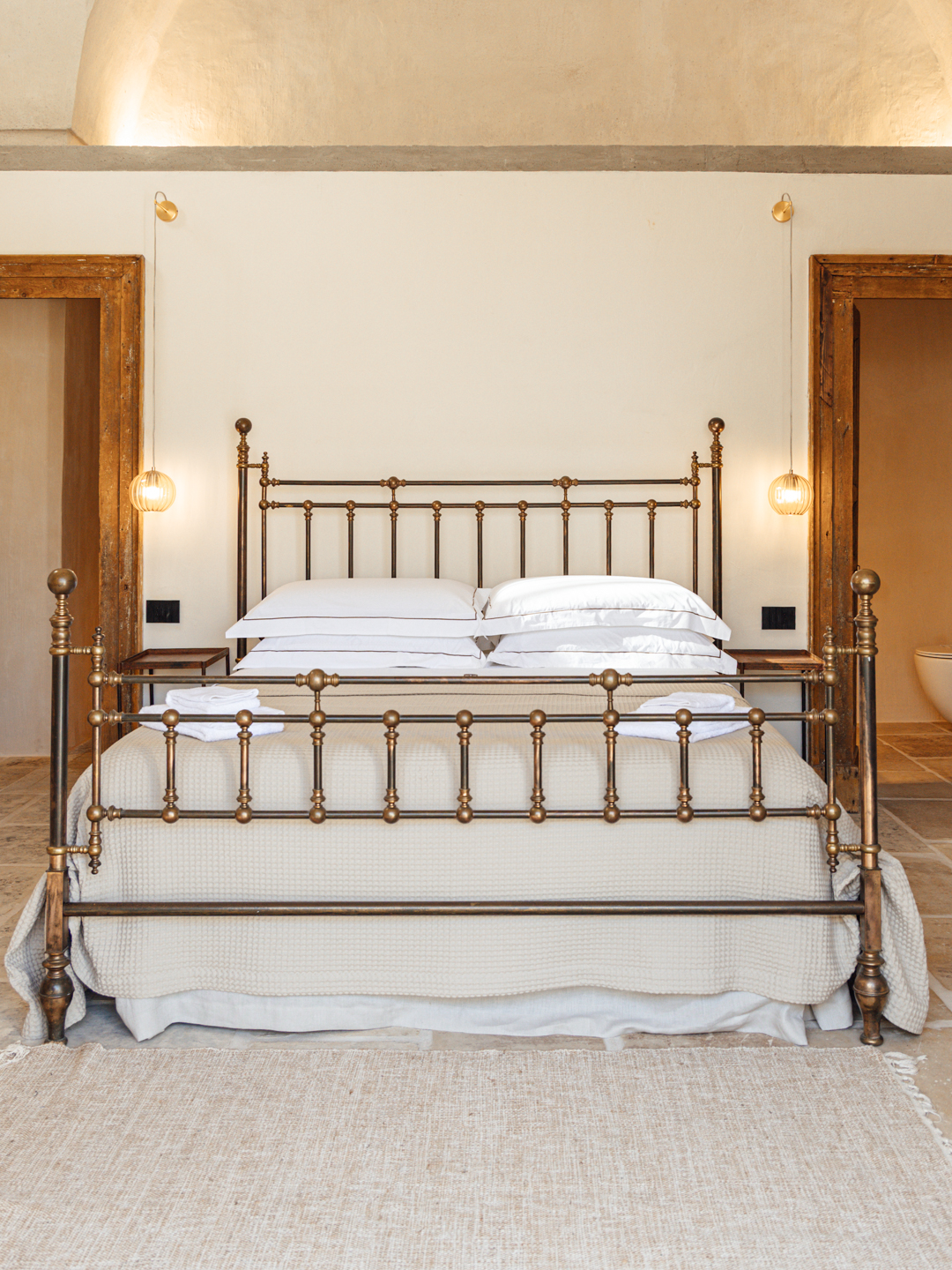
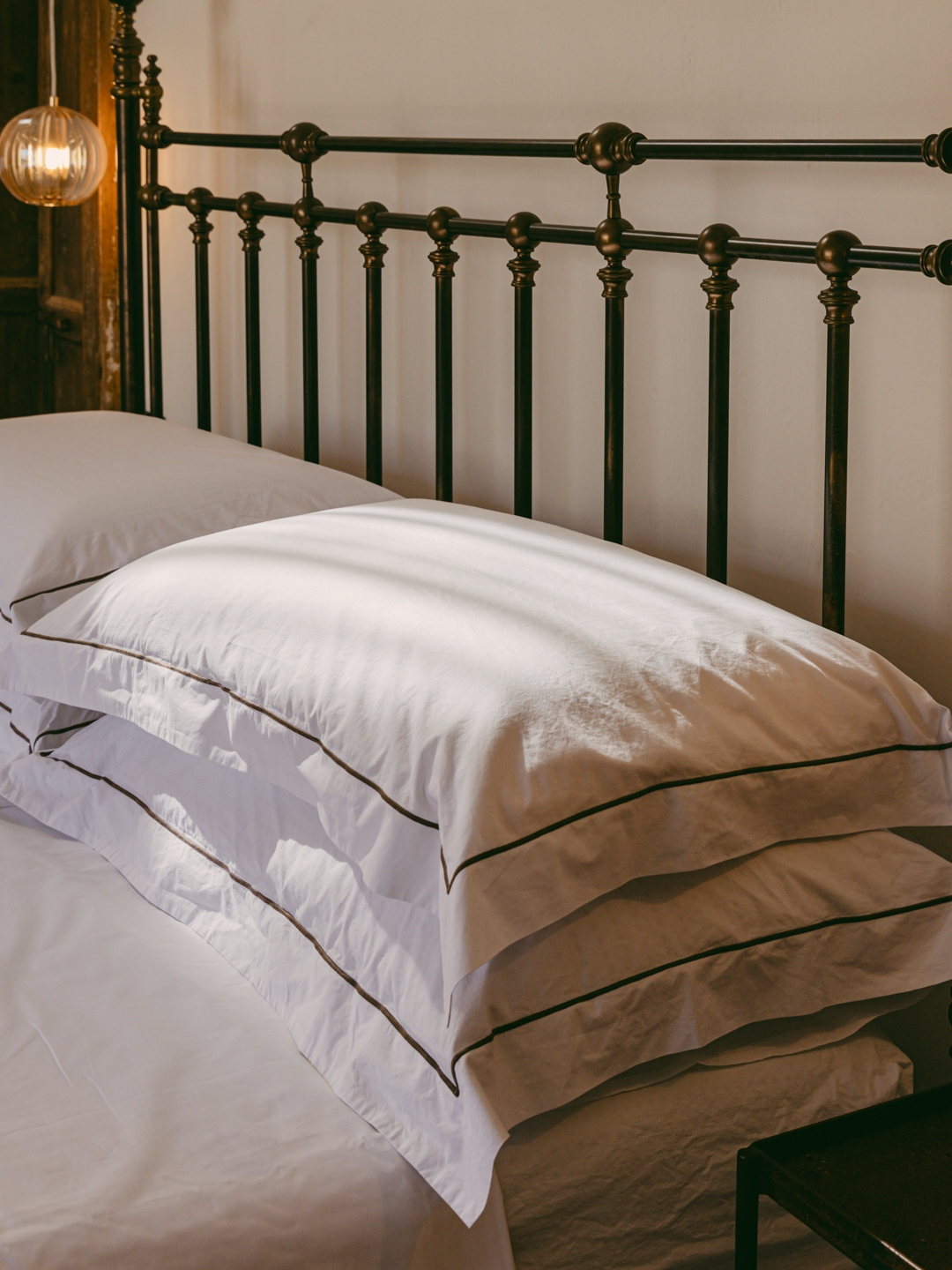
The master suite is a study in balance.
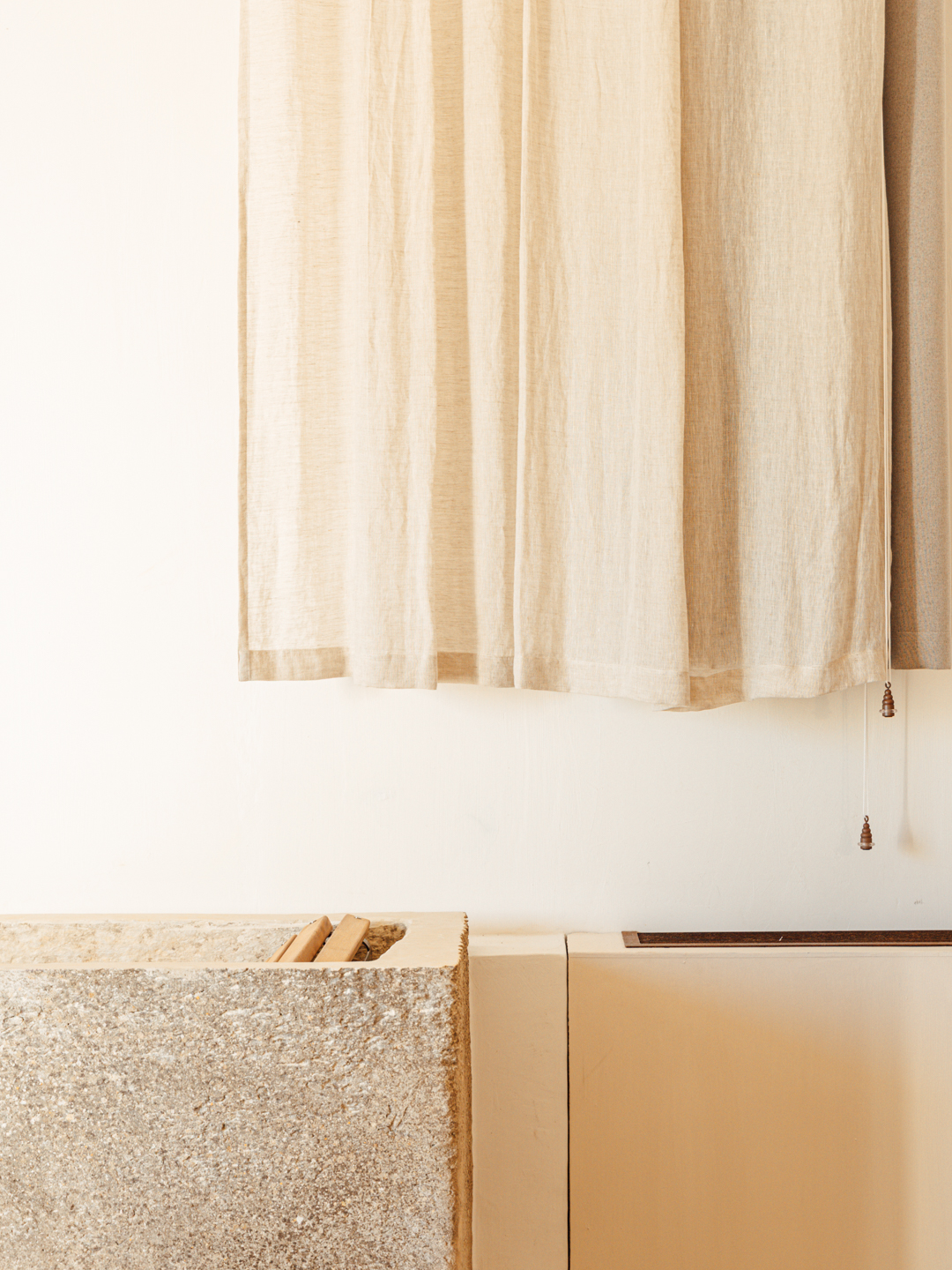
In one corner, a stone bathtub carved from a single block of ancient rock draws the eye.
It is not there to decorate but to remind you that matter carries memory.
Beside it, a large window opens towards the pool, allowing the light to move softly across the walls.
It is a room designed not only to be lived in but to be felt.


Pool and mediterranean garden in Ugento: the luxury of slowness
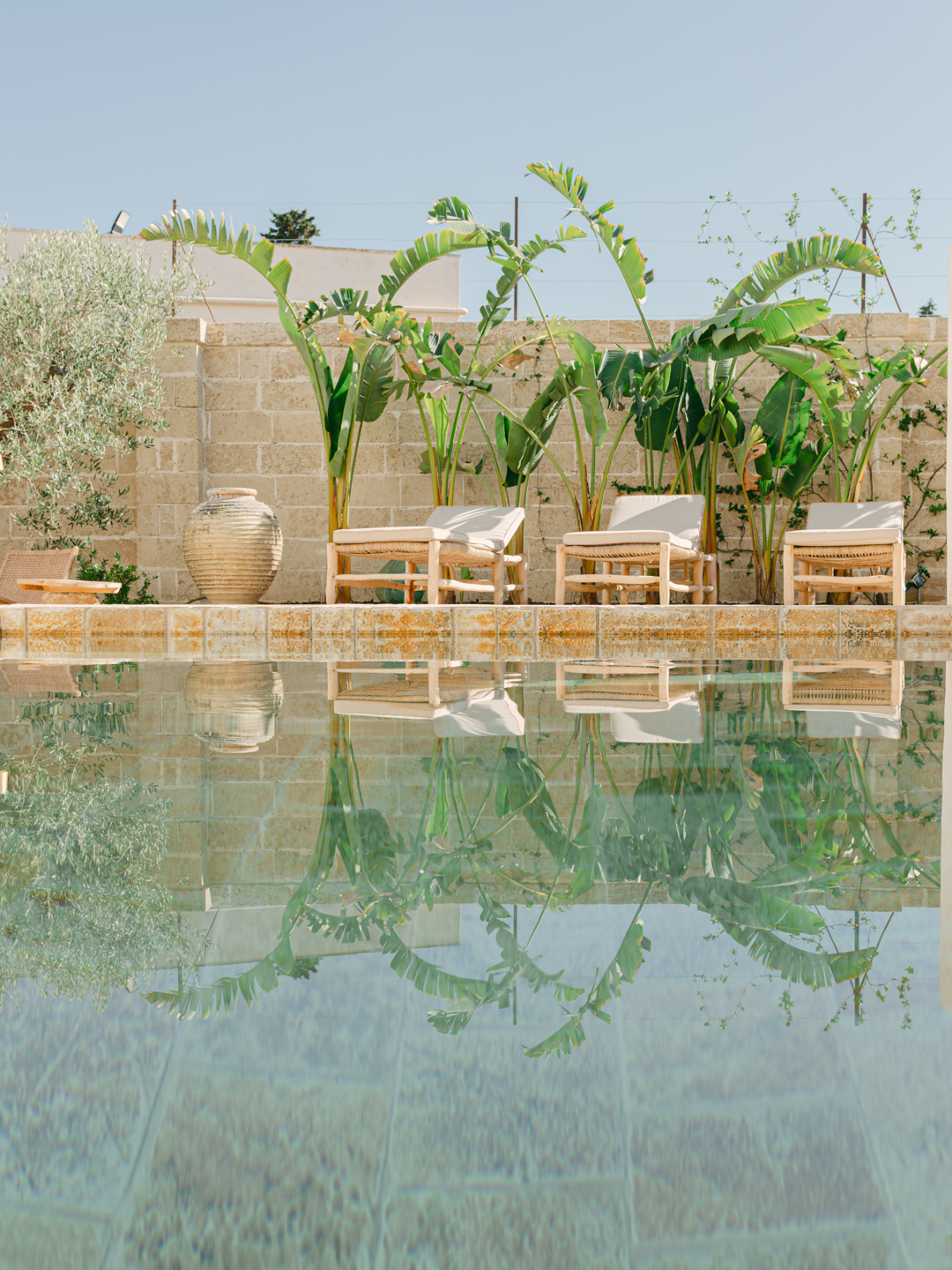
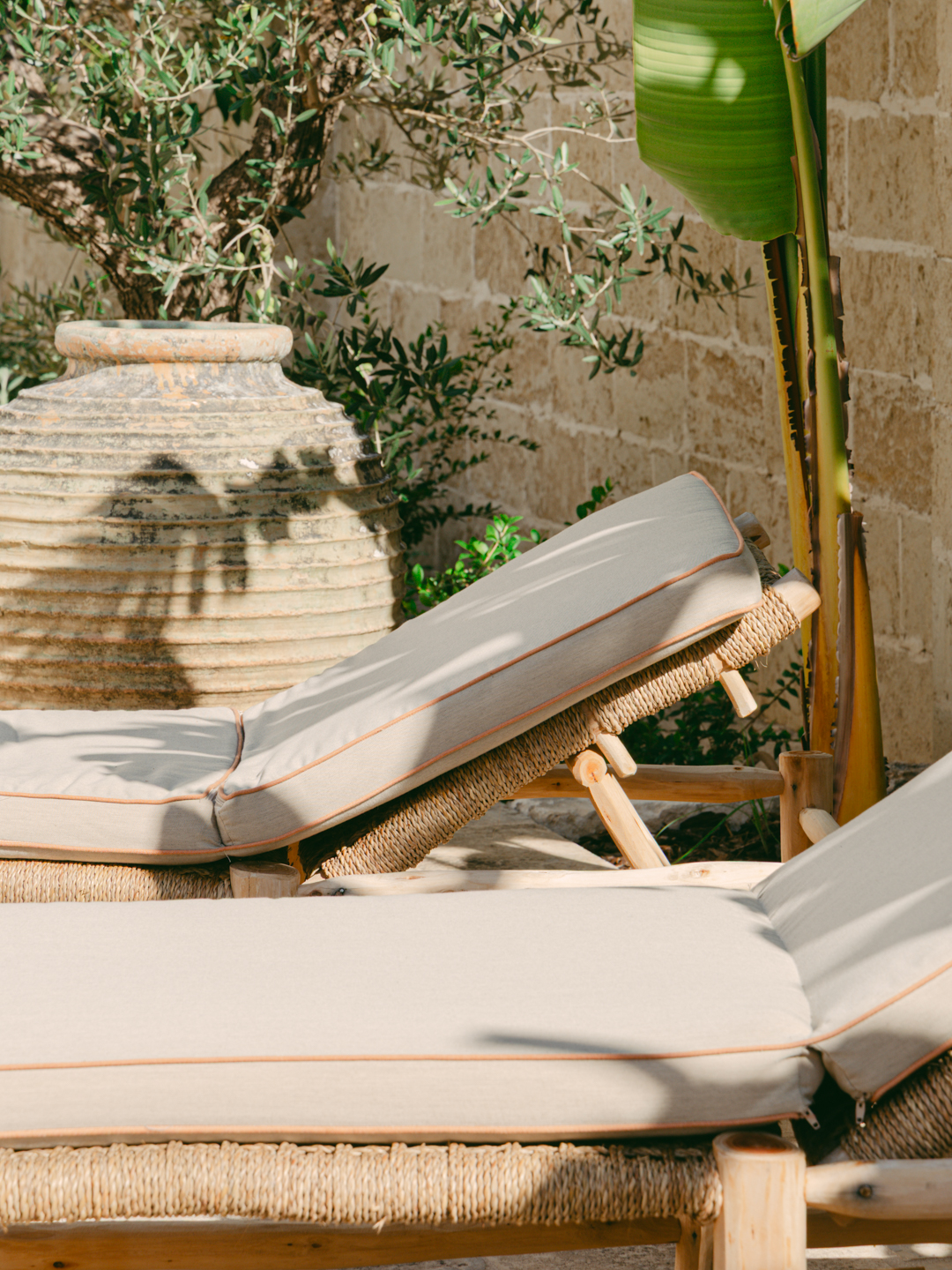
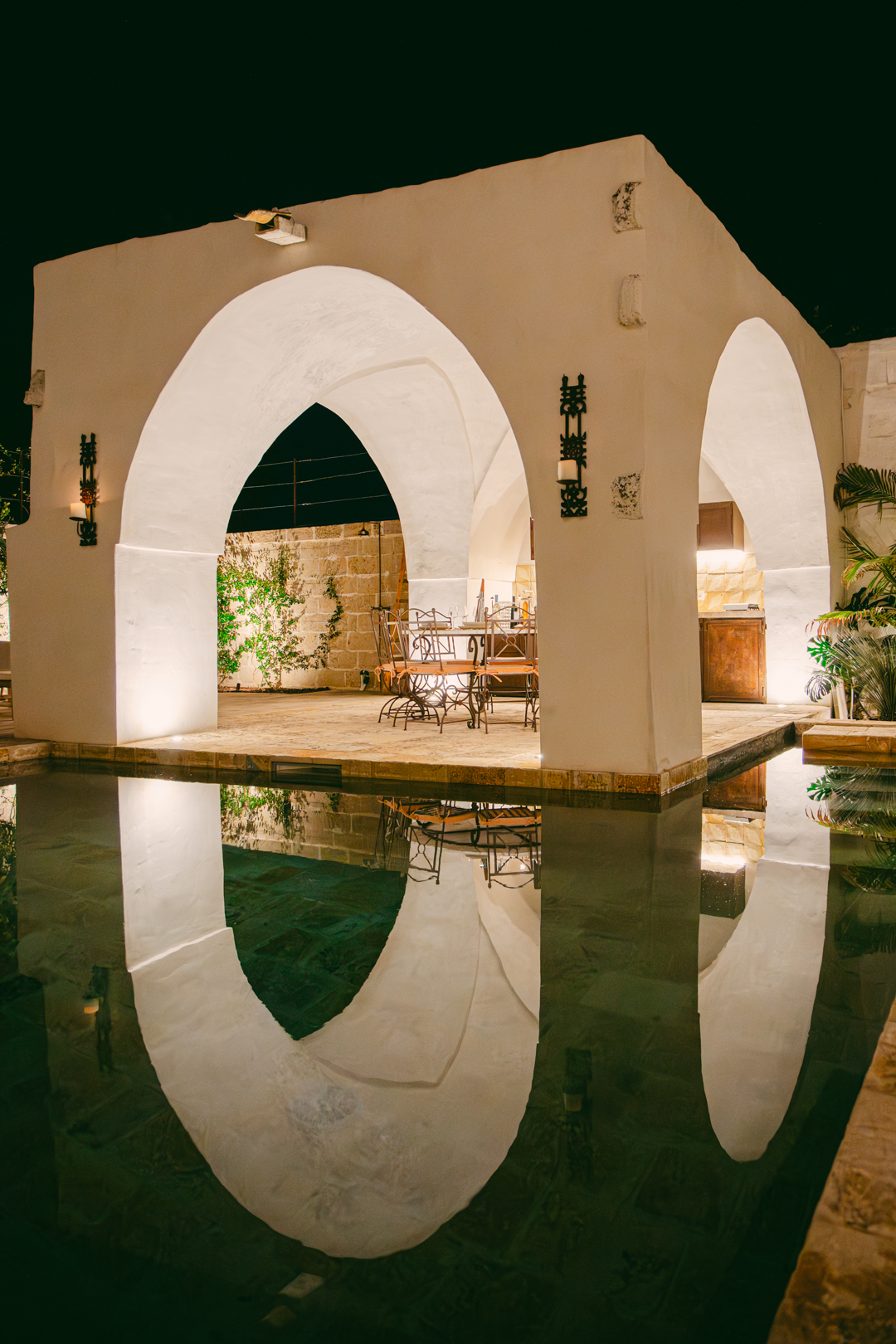
Outside, the pool blends naturally into its surroundings.
The garden is filled with the scent of thyme and rosemary, the water framed by the Mediterranean landscape.
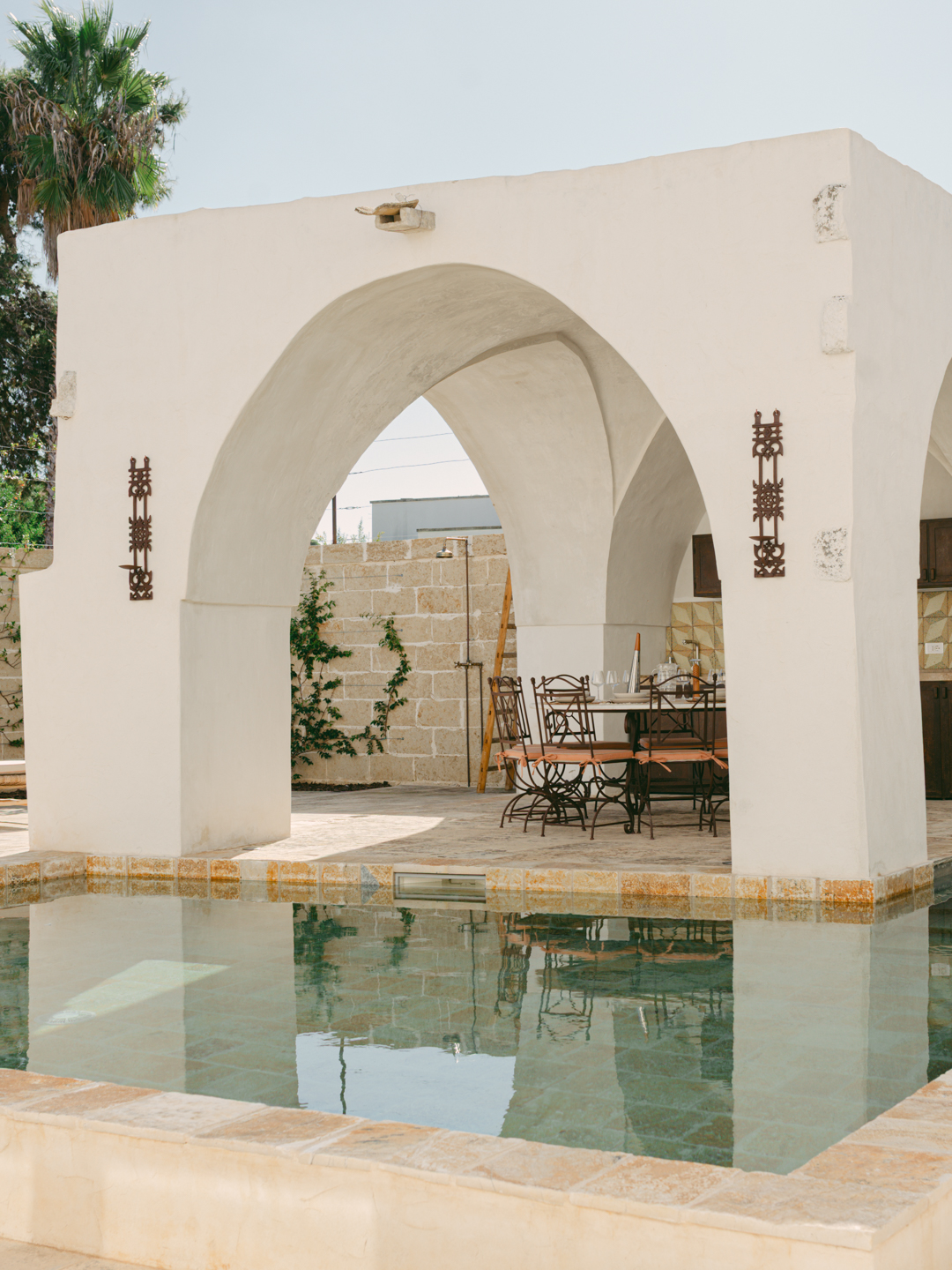
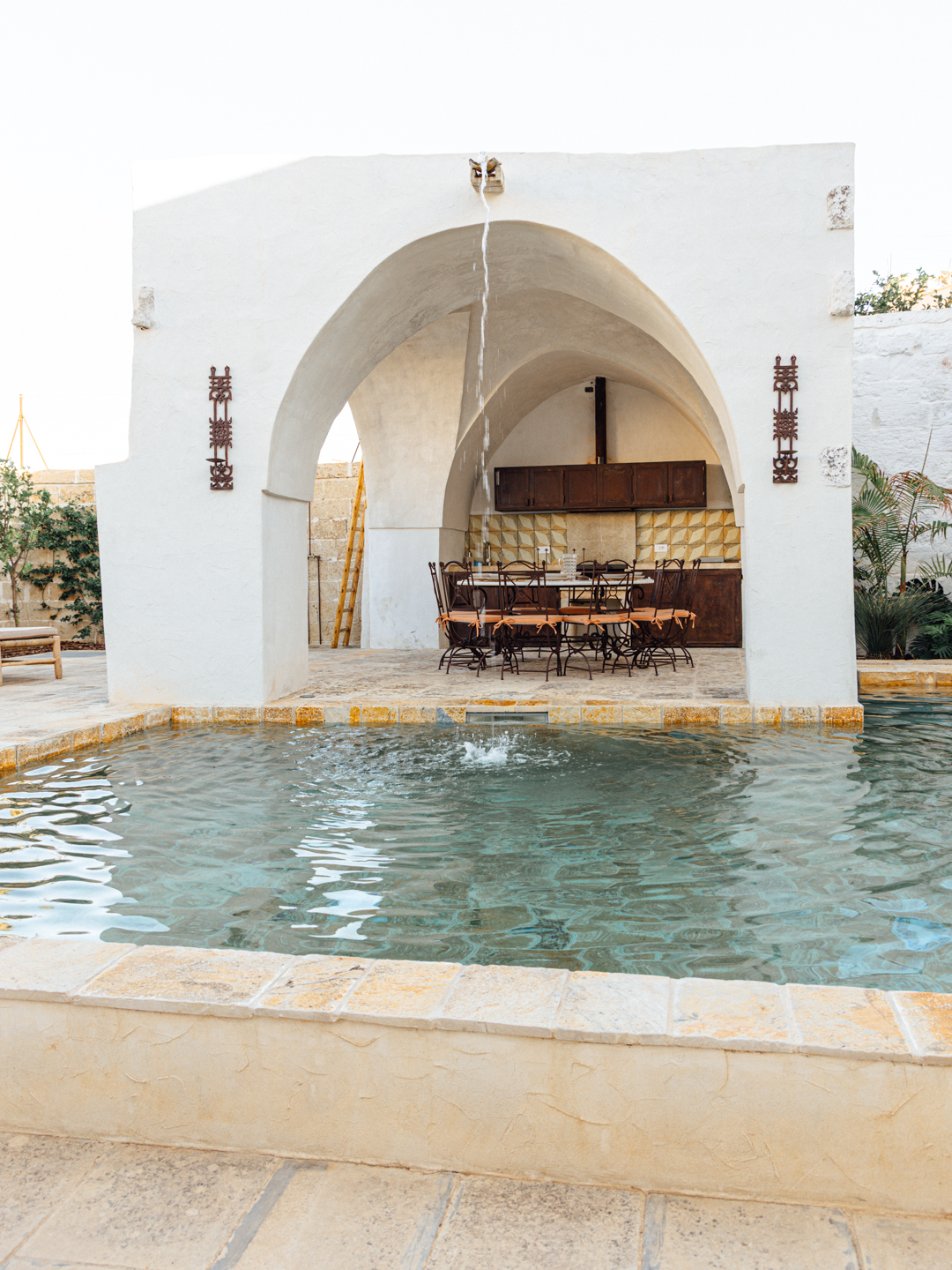
Nearby, a small stone building, once a storage room, has been transformed into a shaded gazebo.
From the roof, through an upside-down tile, a thin waterfall falls continuously, creating a soft and constant sound.
A small detail, but one that captures the entire philosophy of the house: to listen rather than to impose.
Antonio and Debbie did not build to show off.
They restored to bring life back, to respect what already existed.
In a region that too often forgets its own worth, gestures like this mean more than any architectural statement.
As I explore, I already imagine the photographs I will create.
Every beam of light, every reflection on the walls changes the story.
If someone one day falls in love with this place through my images, it will mean I have succeeded in sharing what I felt.



Sunset over Salento: the terrace of Masseria Gemini
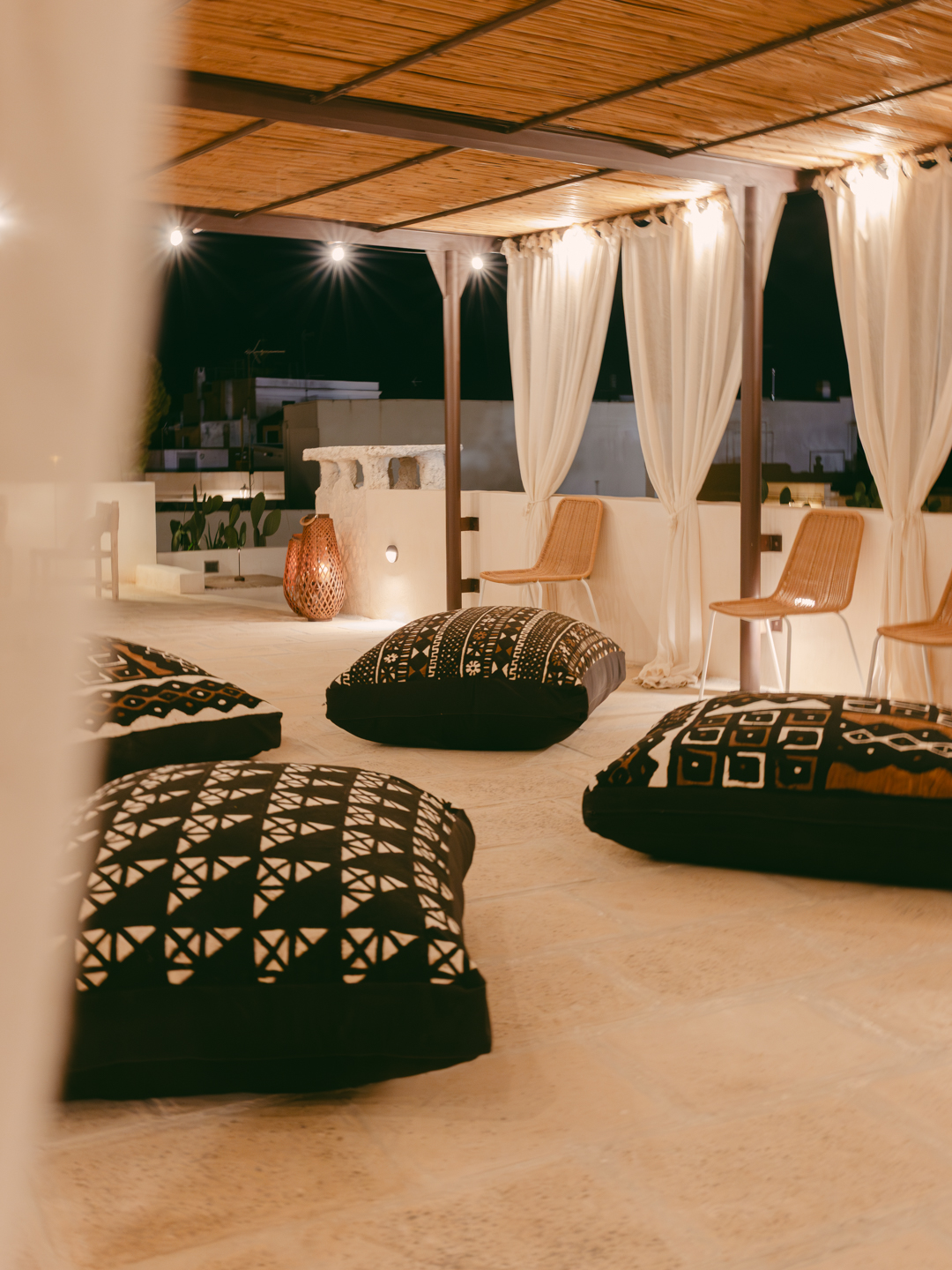
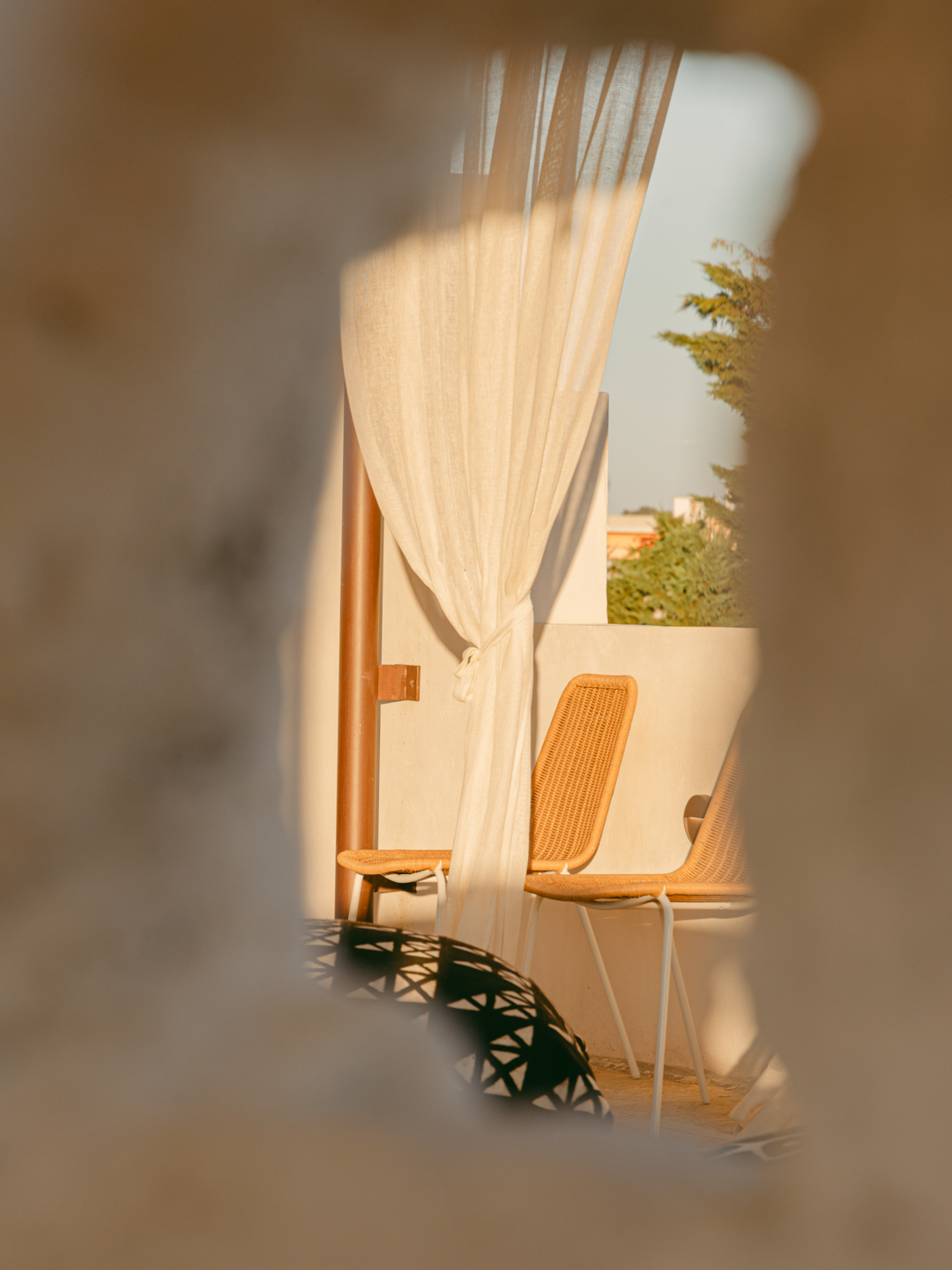
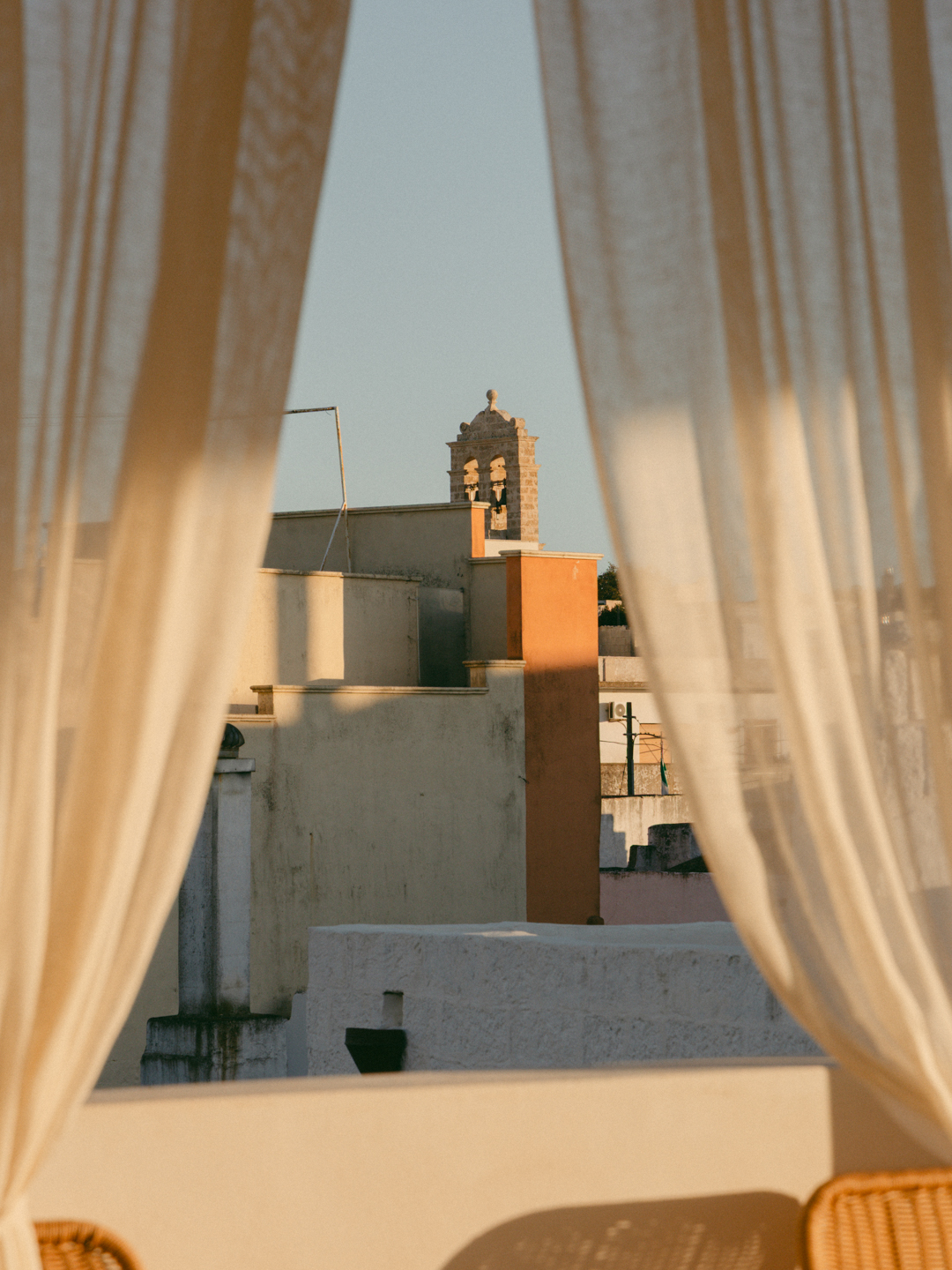
Late in the afternoon, I climb to the terrace.
It is my favourite time of day, when the sun lowers and the light turns golden.
From up here, the village seems still, the bells ring faintly, and the sky turns shades of pink and amber.
I take a few photographs, then stop.
Sometimes it is better to let memory hold the image.
It is rare, today, to find places where beauty is not designed but happens naturally.
I ask Antonio why Ugento, why here, why now.
He tells me that he and Debbie fell in love with the calm, the proximity to the sea, and above all, the sense of freedomthat fills the air.
From this masseria in the heart of Salento, you can reach the white beaches of Torre San Giovanni and Torre Mozza, wander through Gallipoli, or drive to Santa Maria di Leuca, where the Adriatic meets the Ionian.
Lecce and Otranto are less than an hour away, but the real luxury is that you do not have to move at all.
You can stay here, in the silence of Gemini, and watch time slow down.
Antonio tells me they will use Masseria Gemini both as a family home and as a boutique retreat for travellers who share their idea of beauty.
But they are already dreaming of the next project, another story waiting to be restored.
Listening to him, I realise that true luxury is never defined by money, but by intention.



Restoration and rebirth: how Masseria Gemini became a refuge of charm
Antonio shows me photographs of the masseria before the works.
Crumbling walls, damp corners, rooms empty of meaning.
It is striking to see how little it sometimes takes to bring dignity back to a place.
This was not a renovation; it was an act of respect.
The cracks were left visible, the imperfections untouched.
That is where its true beauty lies.
Today, Masseria Gemini is proof that high-end hospitality can coexist with identity.
It is a way of understanding luxury that speaks the language of truth, not of display.




Dimore d’Eccellenza: narrating the soul of places
When I created Dimore d’Eccellenza I did not want a list of hotels.
I wanted an editorial journey.
Each chapter begins with an encounter, a feeling, a shared vision.
Masseria Gemini perfectly reflects the kind of luxury I aim to portray, one defined by time rather than appearance.
My photography seeks to express emotion rather than space.
I do not document; I narrate through light, texture, and silence.
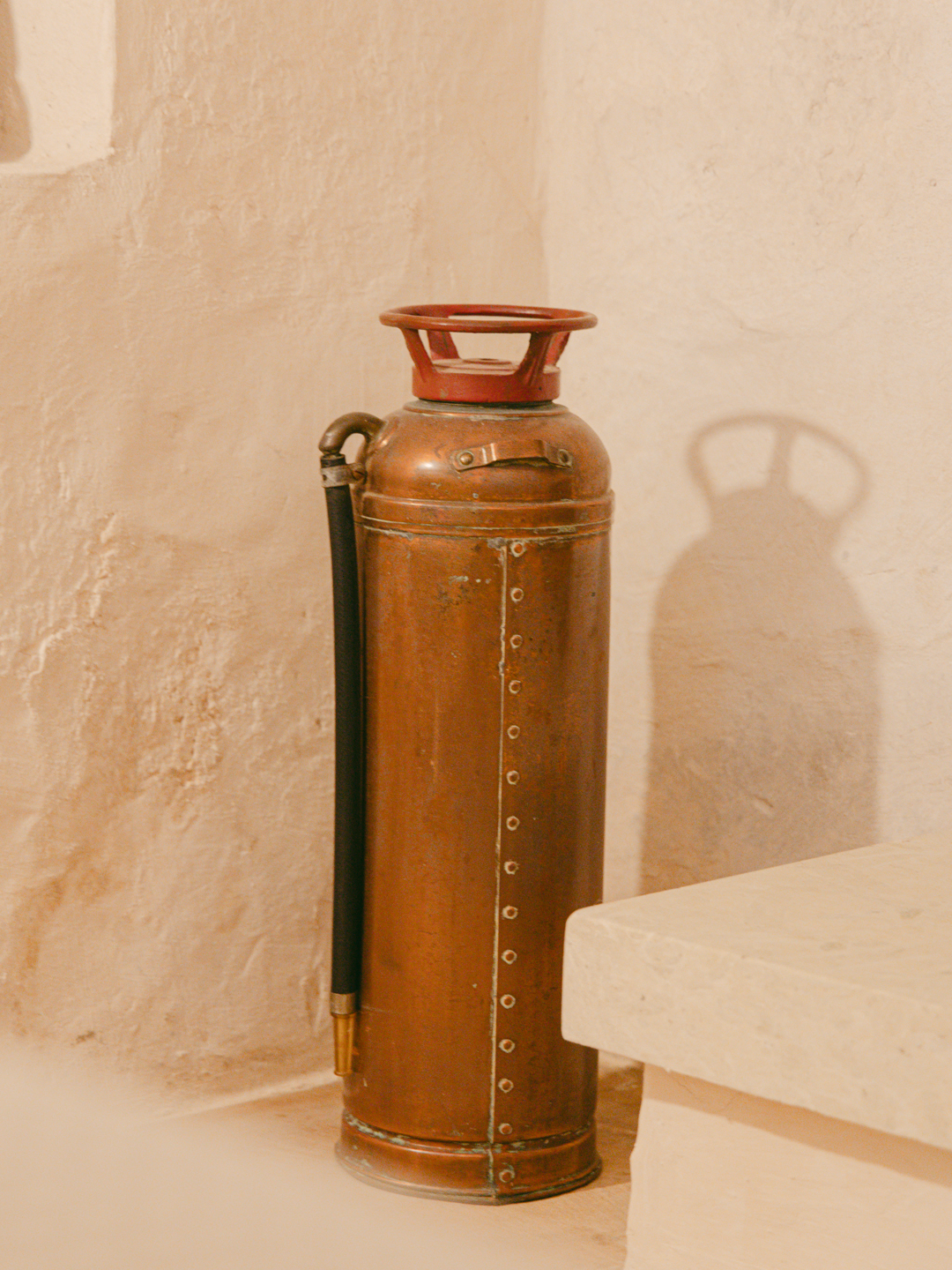
The roughness of stone, the reflection of water, the calm of an empty room — these are the details that transform a place from accommodation into experience.
Those who read Grand Hotel Tremezzo sul Lago di Como will recognise the same pursuit: an Italy capable of combining elegance and authenticity, luxury and quietness, Dolce Vita and truth.
Here I found the same coherence I seek in every place I photograph: natural light, slow rhythm, and honesty of materials.
Capturing Masseria Gemini was not only about creating images but also about expressing gratitude towards my land and to those who invest in it with vision.
The luxury of time rediscovered
As I leave Gemini, the village is bathed in the warm light of sunset.
The woman at the window is still there and waves goodbye.
Perhaps she does not know what I came to do, but I think she understood.
Masseria Gemini reminded me that luxury is not found in things, but in the time you allow yourself to live them.
It is in the silence you choose, in the calm you create, in the gratitude of being able to say, I will come back here.
And if every chapter of Dimore d’Eccellenza is a way of telling the story of Italy’s beauty, this one feels among the most intimate.
Because it speaks of home, of belonging, and of a land that continues to surprise me even when I think I already know it.
Masseria Gemini joins the Dimore d’Eccellenza collection as a symbol of a Salento that knows how to rise again, with calm, authenticity, and vision.
This article is part of Dimore d’Eccellenza, the editorial project by Matteo Arghirò dedicated to telling the story of Italy’s most inspiring hospitality through light, silence, and timeless elegance.